Indecent Exposure#
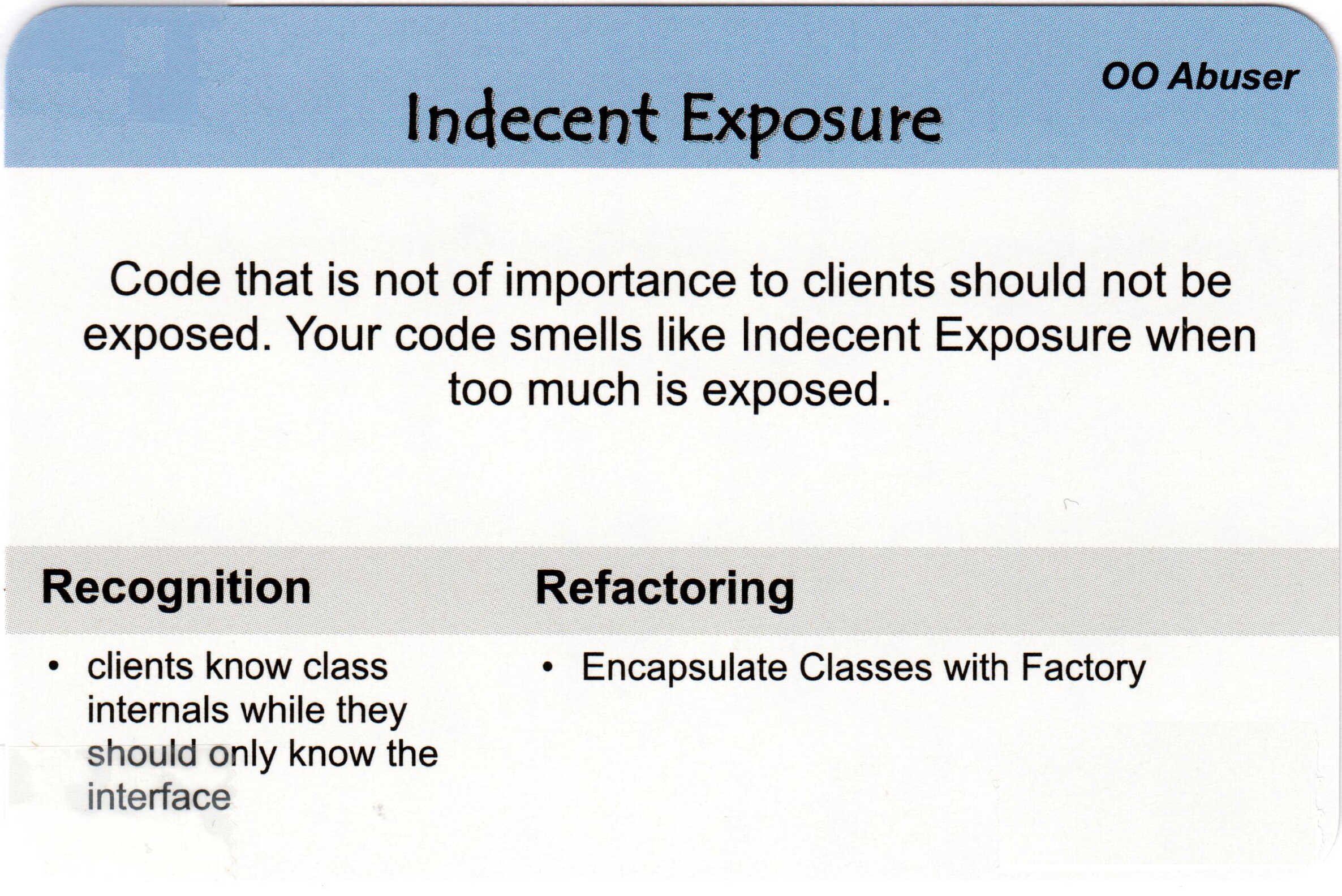
“Indecent Exposure” is a code smell that occurs when a class exposes too much of its internal implementation details to the outside world. This smell violates the principle of encapsulation, which states that a class should hide its internal state and only expose a well-defined interface to interact with other classes. When a class exposes its internal details, it becomes tightly coupled to its clients, making it harder to maintain, evolve, and test.
The term “Indecent Exposure” highlights the fact that the class is revealing too much about its internal implementation, similar to a person exposing too much of their body in public.
Indecent Exposure can lead to several problems:
High Coupling: When a class exposes its internal details, it becomes tightly coupled to its clients. Changes in the class’s implementation can have a cascading effect on other classes, leading to a fragile and error-prone codebase.
Reduced Encapsulation: Exposing internal details violates the principle of encapsulation, which aims to hide the implementation details and provide a well-defined interface. This can lead to dependencies on specific implementations and reduce the flexibility of the system.
Maintenance Difficulty: Classes that expose too much information can be harder to maintain and evolve. Changes in the internal implementation may require modifications in multiple places, increasing the risk of errors and inconsistencies.
Reduced Flexibility: Tight coupling due to indecent exposure can reduce the flexibility of the system. Clients may rely on specific implementation details, making it harder to change or extend the class without affecting other parts of the system.
Solution#
Encapsulate Classes with Factory Method or Abstract Factory Pattern: If a class exposes its internal details, consider encapsulating the creation and interaction with the class using a factory method or abstract factory. This will help in hiding the implementation details and providing a well-defined interface to clients.