Alternative Class with different Interfaces#
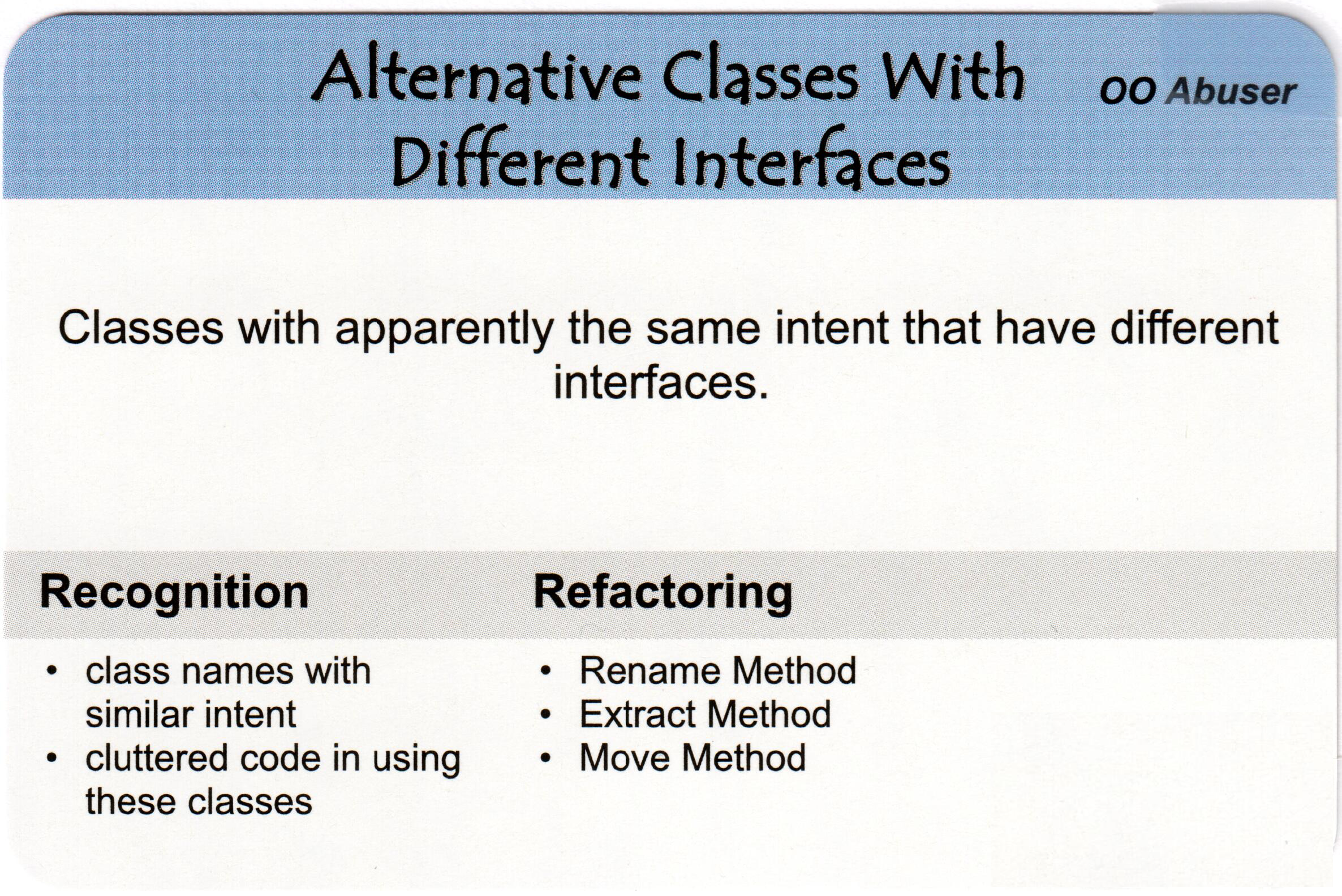
An “Alternative Class with Different Interfaces” is a code smell that occurs when two or more classes have similar functionality but different interfaces. This smell can lead to confusion, duplication, and maintenance challenges in the codebase. When classes with similar functionality have different interfaces, it becomes harder to understand, maintain, and extend the system.
The term “Alternative Class with Different Interfaces” highlights the fact that multiple classes provide similar functionality but expose different interfaces to clients. This can lead to inconsistencies, duplication, and difficulties in using or extending the classes.
Alternative Classes with Different Interfaces can lead to several issues:
Confusion: When classes with similar functionality have different interfaces, developers may find it confusing to work with the classes. Inconsistencies in the interfaces can lead to misunderstandings and errors.
Duplication: If multiple classes provide similar functionality but have different interfaces, it can lead to code duplication. Developers may need to write redundant code to work with each class, increasing the risk of errors and inconsistencies.
Maintenance Challenges: Classes with different interfaces can be harder to maintain and evolve. Changes in one class may not be easily applied to others, leading to inconsistencies and additional effort in keeping the classes in sync.
Reduced Flexibility: When classes with similar functionality have different interfaces, it can reduce the flexibility of the system. Clients may need to adapt to different interfaces, making it harder to switch between classes or extend the system.
Solution#
Extract Method: Identify the common functionality between the classes and extract it into a shared method or function. This will help in reducing duplication and ensuring consistency in the behavior.
Move Method: If the classes have similar functionality but different interfaces, consider moving the methods to a common superclass or helper class. This will help in centralizing the behavior and providing a consistent interface to clients.
Rename Method: If the classes have similar functionality but use different method names, consider renaming the methods to have a consistent naming convention. This will make it easier for developers to understand and work with the classes.
Introduce Adapter (pattern): If the classes have different interfaces but need to work together, consider introducing an adapter that translates the interface of one class to match the other. This will help in bridging the gap between the classes and enabling them to collaborate effectively, while only implementing the de functionality once.