Divergent Change#
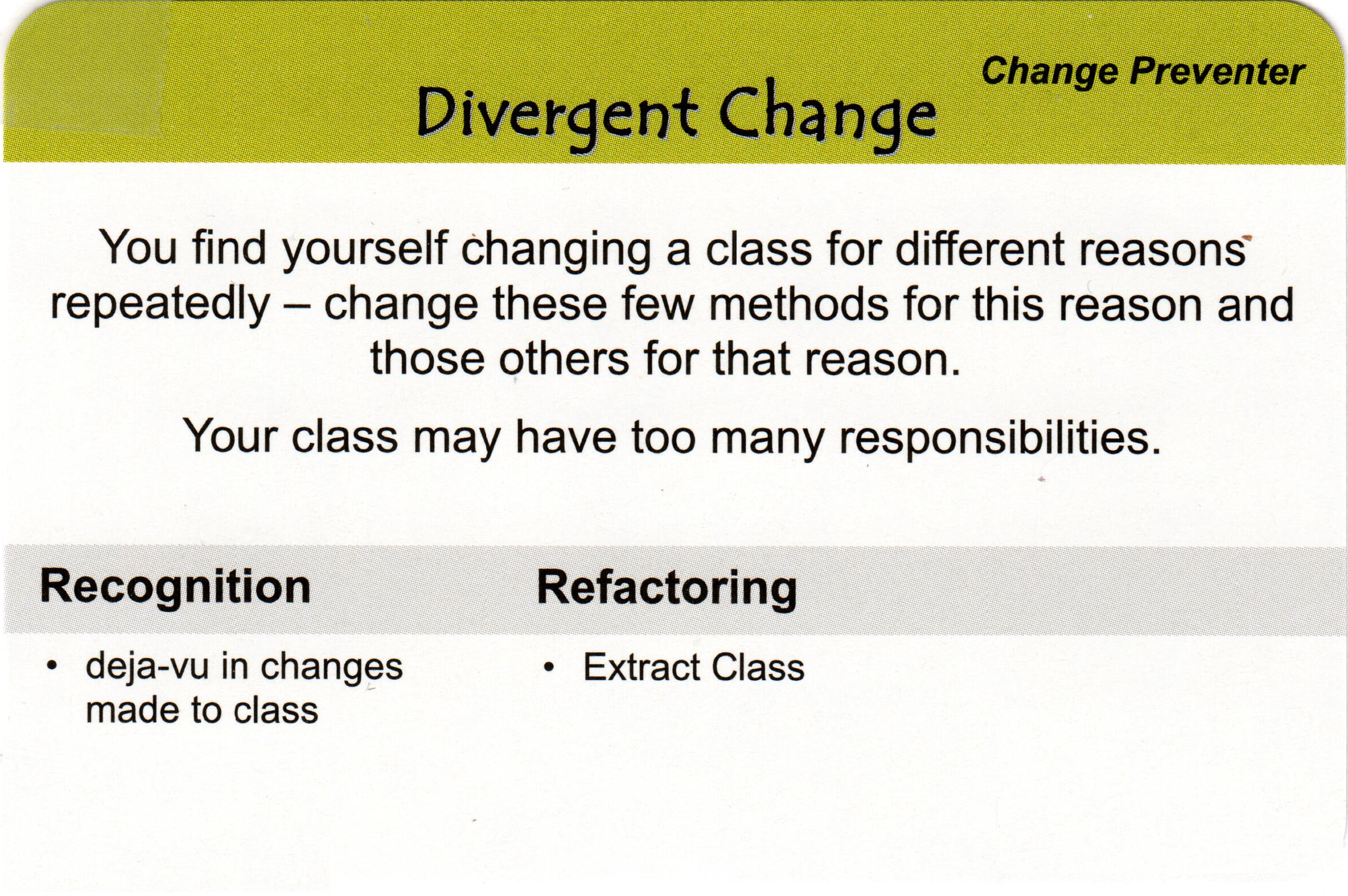
is a code smell that refers to a situation in software development where a single class or module undergoes multiple changes for different, unrelated reasons. This smell indicates that the class/module is responsible for too many things and lacks a clear and focused responsibility.
In other words, when you have a class that tends to be modified frequently due to various, distinct requirements, it suggests that the class is not cohesive and has taken on multiple roles. This can lead to several issues:
Maintenance Difficulty: With multiple changes occurring in one class, it becomes challenging to predict the impact of each change. This can result in unintended side effects and make debugging and maintenance more complex.
Readability: Code that handles multiple unrelated functionalities can be difficult to understand. Developers may need to grasp a wide range of concepts and behaviors in a single class, reducing the code’s readability.
Risk of Errors: As changes are made, there is a higher chance of introducing errors or bugs, especially in parts of the class that are unrelated to the current changes.
Reuse and Extensibility: A class that is not focused on a single responsibility is less likely to be reusable in other parts of the system or to be easily extended for new requirements.
To address the “Divergent Change” smell, you can apply several refactoring techniques:
Single Responsibility Principle: Ensure that each class or module has a clear, singular responsibility. If a class is responsible for multiple things, consider breaking it down into smaller classes, each handling a single responsibility.
Extract Classes: Identify the different responsibilities within the existing class and extract them into separate classes. This will help in isolating changes related to each responsibility.
Composition: Instead of having a single class handle multiple responsibilities, create a set of smaller classes that can collaborate to achieve the overall functionality.
Use Design Patterns Look for appropriate design patterns that can help in managing different responsibilities. For instance, the Strategy pattern can be used to encapsulate varying behaviors.
Code Reviews: Regular code reviews can help in identifying cases of divergent change. If multiple team members are working on the same class for different reasons, it’s a sign that the class might need restructuring.
By addressing the “Divergent Change” smell, you can improve the maintainability, readability, and overall quality of your codebase. It’s important to keep the principles of modularity and separation of concerns in mind while designing and evolving your software architecture.